Sideboards and Buffets for the Dining Room and Living Room
Sideboards and buffets are low storage units, usually 75 to 90 cm high, that hold tableware, linens and everything you do not want on the table. People use the two words almost interchangeably. In practice, a buffet tends to be deeper and more traditional, while a sideboard is often slimmer and more modern. This page helps you choose between them.
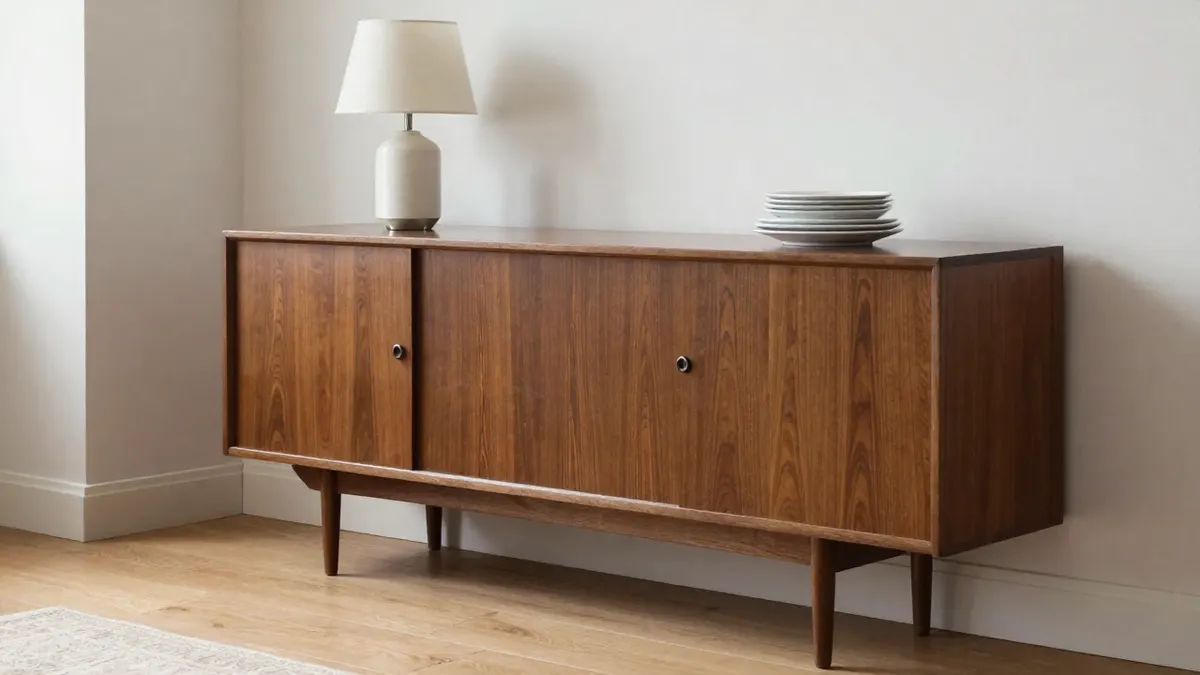
Sideboards and buffets: what is the difference?
A classic buffet has a solid body, two or three doors and a few drawers, with a depth of 45 to 55 cm. A sideboard is usually 35 to 45 cm deep, sits on slim legs and has a lighter look.
Depth matters more than most buyers expect. In a narrow dining room, 10 cm saved can keep a walkway clear.
Which size should you choose?
Width
Most models measure between 120 and 200 cm wide. For a table seating four to six people, 140 to 160 cm is plenty. Larger rooms can take 180 cm or more, but only if the wall is free of radiators and door frames.
Height and clearance
Standard height is about 80 cm. If you plan to hang a mirror or artwork above, leave at least 50 cm between the top of the unit and the frame. Allow about 90 cm in front of the doors so they open without hitting a chair.
Materials and finishes
Solid wood is the most durable and can be sanded and refinished, but it is heavy. A 160 cm oak sideboard can weigh 50 kg or more. Veneered MDF is lighter and cheaper, and it holds up well if you avoid standing water and hot dishes on it.
Matte lacquer looks clean and hides fingerprints better than gloss. Gloss shows every mark, so I would skip it in a family home.
Using a sideboard outside the dining room
A low unit works well in an entrance hall, under a window or behind a sofa. In a small living room, a 180 cm model can double as a media console. If your room has an awkward corner, a corner TV unit (guide in French) may fit the space better than a straight unit.
In a studio, the same logic applies. Pair a slim sideboard with a single sofa bed (guide in French) and you get storage and a spare bed without crowding the floor.
How much do sideboards and buffets cost?
Prices start at around 150 euros for a basic laminated model with two doors. Veneered units usually fall between 250 and 500 euros. Solid wood pieces begin at about 600 euros and rise quickly with size and finish. Prices are indicative and vary with the season and promotions.
Practical checks before you order
- Measure the wall, then subtract 10 cm for skirting boards and sockets.
- Check the door type: sliding doors save space, hinged doors give fuller access.
- Look for adjustable shelves, since plates and glasses vary in height.
- Choose soft-close hinges if you have children or thin walls.
- Confirm the delivery size, because a 200 cm box will not turn in every stairwell.
Caring for your sideboard
Dust with a dry microfiber cloth every week. For wood, a lightly damp cloth is enough, followed by a dry wipe. Use felt pads under lamps and vases, and keep the unit at least 10 cm from a radiator to prevent warping. Tighten the screws once a year, as legs loosen over time.
Frequently asked questions
What can I store in a sideboard?
Plates, glasses, cutlery, table linens and serving dishes fit well. Drawers suit cutlery and napkins, while shelves behind doors take heavier items. Keep fragile glassware on the middle shelf, away from the door edge.
How high should a sideboard be?
Between 75 and 90 cm is standard. That matches the height of a kitchen worktop, so it also works as a serving surface. Go lower, around 65 cm, only if you want it under a large window.
Can a sideboard go against a wall with a radiator?
It can, but leave a gap of at least 10 cm. Direct heat dries wood and can crack veneer. A sideboard with legs lets air circulate and is a safer choice.
Is a buffet or a sideboard better for a small room?
A sideboard, nearly every time. Its shallower depth, often 35 to 40 cm, keeps the room open. A buffet gives more storage but needs space to match.